The Timeless Art of Ancient Greek Vases: From Practical Jugs to Ornate Amphorae
When you think of Ancient Greece, images of marble statues and grand temples often come to mind. However, one of the most enduring and informative legacies of this civilization is found in its pottery. The decorative and functional vessels created by Greek artisans over two millennia ago are not just relics of the past; they are windows into daily life, mythology, and social hierarchy. Today, we explore the fascinating world of ancient Greek vases and pot designs, ranging from humble jugs to magnificent urns.
While modern technology has changed how we store liquids and decorate our homes, the fundamental shapes and artistic principles established by the Greeks remain relevant. Whether you are a student of history, an artist looking for inspiration, or simply someone who appreciates beautiful design, understanding these objects provides a unique perspective on human creativity.
Understanding the Purpose: Why Did They Make Pottery?
To truly appreciate Greek amphorae and other vessels, we must first understand their function. In the ancient world, clay was the primary material for storage and transport. Before the invention of plastic or metal cans, everything from wine and olive oil to grain and water was stored in ceramic containers. These were not merely utilitarian objects; they were essential tools for survival and commerce.
- Storage: Large jars, known as pithoi, were used in households to store massive quantities of food and drink.
- Transport: The amphora (plural: amphorae) was designed with two handles specifically to be carried by two people or hung on a ship's mast for easy transport across the Mediterranean Sea.
- Ritual and Burial: Specialized vessels like kraters (mixing bowls) and lekythoi (oil flasks) played crucial roles in religious ceremonies and funeral rites.
It is a common misconception that these pots were only made for the wealthy. While the finest examples were commissioned by the elite, pottery was a mass-produced industry. Every household needed vessels, making potters some of the most important figures in the ancient economy.
The Evolution of Design: From Geometric to Black-Figure
The artistry of Greek pottery evolved rapidly over centuries. Early designs were characterized by simple geometric patterns—triangles, circles, and meanders—that adorned the entire surface of the vessel. As time progressed, artists began to tell stories.
The Black-Figure technique, which emerged around the 7th century BCE, revolutionized the medium. Potters painted figures in black slip against the natural red-orange background of the clay. Details were then scratched into the black paint using a sharp tool, creating intricate lines that depicted scenes from Greek mythology. Heroes like Heracles, gods like Zeus, and tragic figures from the Trojan War were brought to life on the sides of these ornate Greece amphorae.
Later, the Red-Figure technique reversed this process. Artists left the figures in the natural red color of the clay while painting the background black. This allowed for greater detail and more fluid lines, enabling artists to depict the human body with unprecedented realism. These vessels became canvases for the greatest painters of the era.
Exploring the Shapes: A Guide to Common Vessel Types
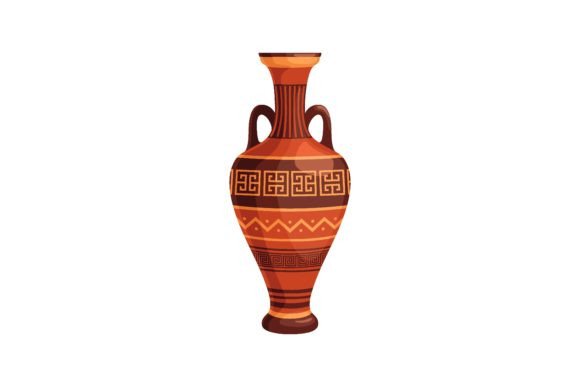
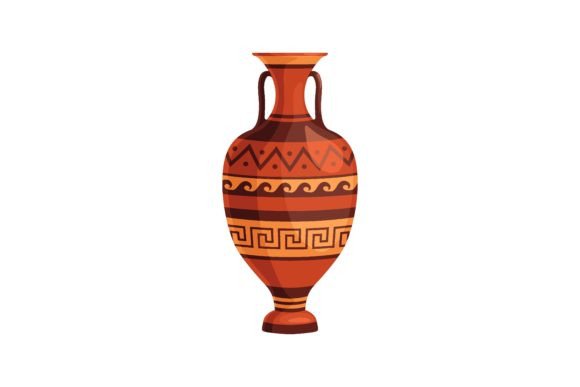
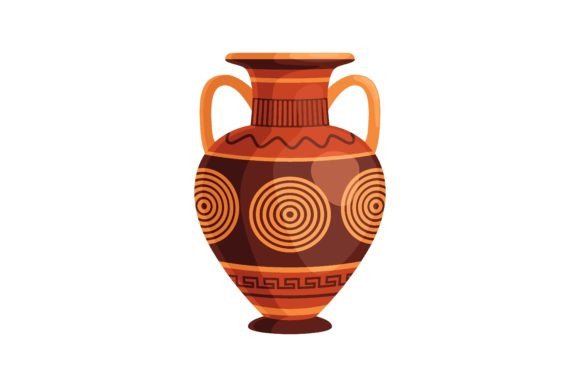
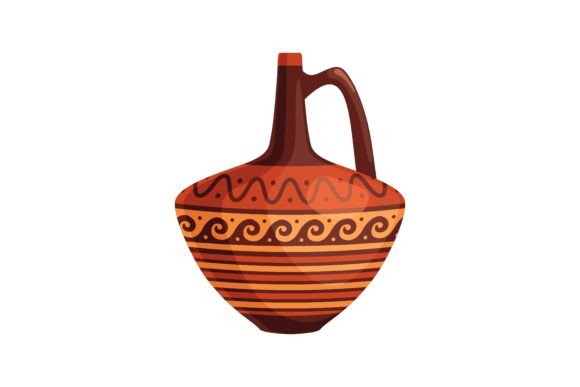
If you have ever seen a flat vector illustration of Greek pottery, you might notice distinct shapes. Each shape had a specific name and purpose. Understanding these terms helps us visualize how these objects were used in daily activities.
- The Krater: A large bowl used for mixing wine and water. Wine was rarely drunk straight in ancient Greece; it was considered barbaric. The krater was the centerpiece of the symposium, a social gathering where men would discuss philosophy, politics, and poetry.
- The Oinochoe: Also known as a "wine jug," this vessel had a single handle and a pouring lip. It was used to serve wine from the large krater into individual cups.
- The Hydria: A water jar distinguished by its three handles—one for lifting and two for carrying. These were often used by women to fetch water from public fountains.
- The Lekythos: A slender oil flask, often white in color, used for storing perfumed oil. These were frequently given as gifts and placed in tombs as offerings to the dead.
- The Urn: While the term "urn" is often used loosely today, in ancient Greece, it referred to large vessels used to hold the ashes of the deceased after cremation. These were often highly decorated with scenes of mourning or the journey to the underworld.
Each of these pottery objects tells a story about the person who owned it and the society that produced it. The hydria speaks to the domestic life of women, while the krater reflects the social rituals of men.
The Modern Relevance: Why Do We Still Care?
You might wonder, "What does a vase from 500 BCE have to do with my life today?" The answer lies in the intersection of history, art, and design. The aesthetic principles of Greek pottery continue to influence modern cartoon design and flat vector illustration. The clean lines, bold silhouettes, and stylized figures seen in contemporary digital art often draw direct inspiration from the simplicity and elegance of ancient Greek forms.
Education and Creativity
In the classroom, studying Greek vases is a powerful educational tool. Because written records from ancient Greece are sometimes scarce or biased, the images on pottery provide a visual archive of history. Students can analyze a decoration on a vase to learn about fashion, warfare, sports, and religious practices. It turns abstract history into tangible reality.
For artists and designers, the study of these vessels offers lessons in composition and balance. The way Greek artists filled the curved surface of a jug or urn with narrative scenes is a masterclass in spatial awareness. Modern graphic designers use these same principles when creating logos or icons that need to be recognizable at any size.
Business and Branding
In the business world, the imagery of Greek pottery is often associated with quality, heritage, and luxury. Many brands in the wine, olive oil, and cosmetic industries use motifs inspired by ancient Greek vases to evoke a sense of tradition and authenticity. The "classic" look suggests that a product is timeless and reliable.
Common Misunderstandings About Greek Pottery
Despite their fame, there are several myths surrounding these artifacts that deserve clarification.
Myth 1: All Greek Vases Were Black or Red. While the Black-Figure and Red-Figure styles are the most famous, Greek potters also used the "White-Ground" technique, particularly for funerary lekythoi. These vessels featured figures painted in white slip against a colored background, allowing for softer, more delicate details.
Myth 2: The Paint Was Just Decoration. The paintings were not merely ornamental; they were communicative. A scene on a vase could serve as a warning, a prayer, or a celebration. For example, a vase depicting the abduction of Persephone might be intended to ensure a safe passage for the soul of the deceased.
Myth 3: They Were Fragile and Easily Broken. While clay is brittle, the firing process used by Greek potters was incredibly advanced. Many of these vessels survived wars, shipwrecks, and centuries of burial because the clay was fired at high temperatures, making them surprisingly durable. The fact that we still find thousands of them today is a testament to their construction quality.
The Intersection of Technology and Tradition
In the digital age, the legacy of Greek pottery has found a new home. Flat vector illustrations of decorative ornate Greece amphorae are now popular assets for web design, app icons, and educational materials. By simplifying the complex curves of a real vase into geometric shapes, modern designers capture the essence of the original without losing its historical weight.
This fusion of old and new allows us to engage with history in a fresh way. Instead of staring at a dusty museum exhibit, we can interact with animated versions of these vessels in virtual reality experiences or interactive textbooks. The cartoon design style, with its exaggerated features and bright colors, makes ancient history accessible to children and adults alike, breaking down barriers to learning.
Conclusion: Preserving the Legacy
The story of Ancient Greek vases and pot is a story of human ingenuity. From the practical needs of storing oil to the artistic expression of mythological heroes, these objects bridge the gap between the ancient world and our modern lives. They remind us that even in the most utilitarian aspects of life, such as holding water or wine, humans seek beauty and meaning.
Whether you are admiring a restored urn in a museum, studying the geometric patterns on a textbook page, or creating your own flat vector illustration inspired by these classics, you are participating in a long tradition of appreciation. The next time you see a vase, take a moment to consider its shape, its history, and the hands that shaped it thousands of years ago. In doing so, you connect with a lineage of creativity that spans millennia.
As we move forward in a digital world, let us not forget the value of the tangible. The decorative and functional beauty of Greek pottery continues to inspire, educate, and delight, proving that great design is truly timeless.